Bureau 23: Utilities
NewVistas › Department VIII — Infrastructure › Bureau 23
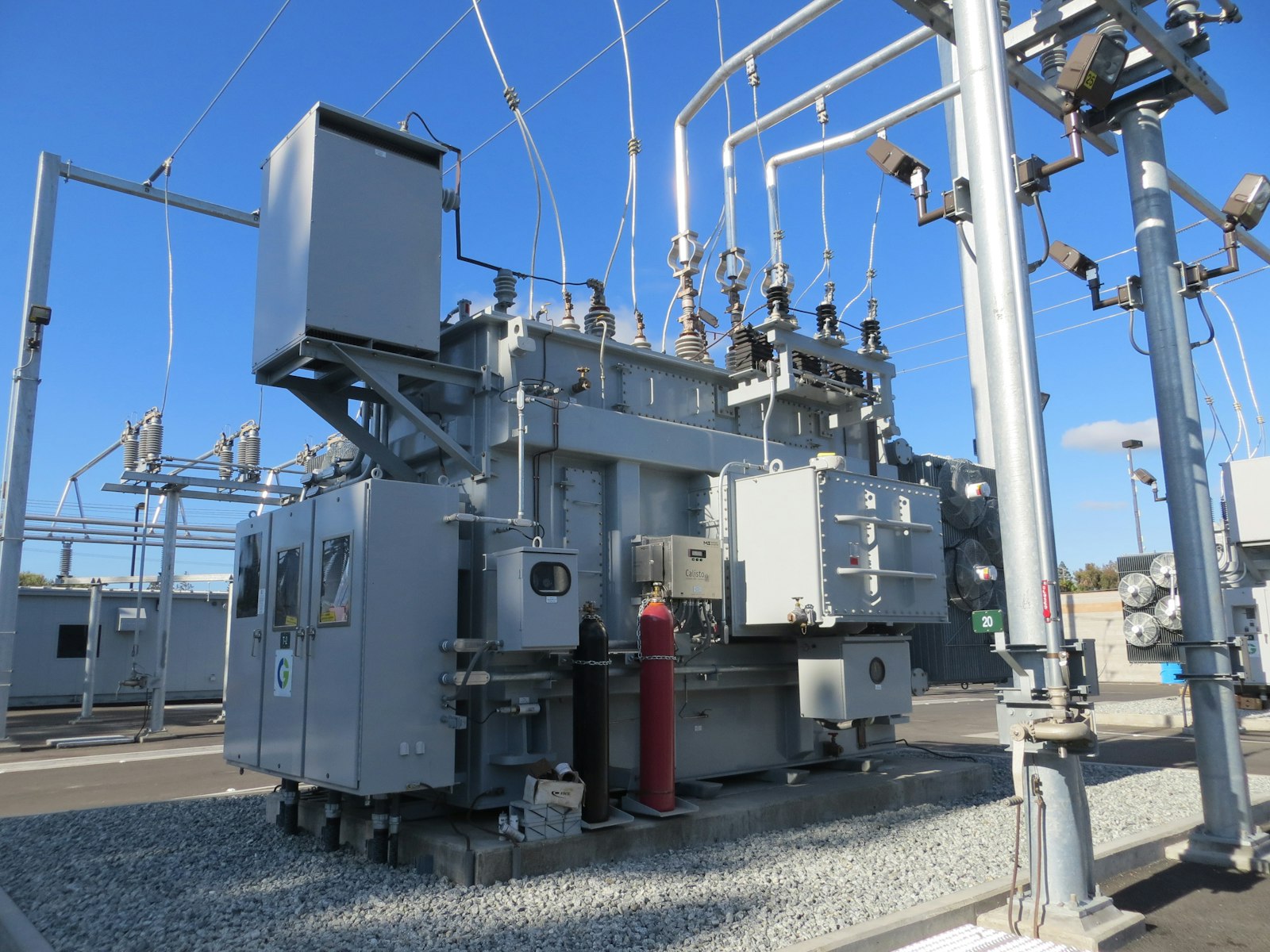
Every building is a utility organism.
Bureau 23 sets the thermodynamic and reliability standards for the community’s utilities — treating each building not as a passive load but as a small, self-sufficient utility refinery. It owns no fuel cell and runs no utility company. It governs the envelope, not the fuel.
The utility-standards rail
Bureau 23 governs building-scale thermodynamic order, reliability and redundancy, service-level availability, lifecycle discipline, the full utility service bundle, CO₂ routing, server-cooling, and the fixed utility-company scale. It is the second Department VIII rail, beside Materials (22) and Transportation (24).
Its power comes from admissibility and standards, not ownership. Bureau 23 may not own assets, operate fuel cells, run utility companies, employ utility labor, hold title, finance equipment, accumulate reserves, or absorb losses. Utility businesses operating under certified plans and Bureau 23’s published standards do all the work; title, finance, lease, custody, proof, and accounting stay in their proper rails.
Bureau 23 orders the thermodynamics, reliability, and lifecycle of utilities — without ever owning or operating them.
Bureau 23 governs
- Building-scale thermodynamic standards
- Reliability, redundancy & SLA
- The full utility service bundle
- CO₂ routing & server-cooling
- Fixed utility-company scale
It never does
- Own assets or operate fuel cells
- Run a utility company or employ labor
- Hold title or finance equipment
- Accumulate reserves or absorb losses
- Become a utility monopoly
Refineries, not passive loads
Bureau 23’s distinctive concept is that each building is a semi-autonomous utility organism — it consumes fuel while producing a whole bundle of services, rather than simply drawing from a distant grid.
Each building’s system can generate electricity and recover heat, cooling, and water; convert waste; route CO₂; clean air; compact recyclables; support servers; and produce process gases — all under AI-managed control. Bureau 23 governs the routing and service-performance standards across that bundle, while Bureau 22 governs the material standards for the recovered output streams. Fuel cells here are distributed refineries, not mere generators.
Redundancy first, SLA second
Bureau 23’s reliability standard begins with physical architecture, not contractual promises. Where duplicated fuel-cell systems are used, the redundancy is built into the hardware — and the service-level agreement simply follows it.
If full building demand is D, each of the two units is sized at about 1.25 D, for roughly 2.5 D installed. In normal operation each carries about half the load at ~40% of capacity; if one unit fails, the survivor carries the full demand with a 0.25 D reserve to spare. The SLA follows that physical redundancy — it never substitutes for it. And the architecture is deliberately source-agnostic: SOFC fuel cells are the first practical core, but the same thermodynamic envelope can accept LNG, hydrogen, compact fission, fusion, or geothermal later. A thermal-source change is a source swap, not an architecture rebuild — Bureau 23 governs the envelope, not the fuel.
The SLA follows the physical redundancy; a promise on paper never substitutes for a second unit in the basement.
Too big to monopolize, too small to fail apart
Utility-company scale is fixed at ten buildings per village domain — producing 192 comparable companies community-wide. That fixed size does two jobs at once.
It prevents any company from growing into a community-wide monopoly, and it prevents fragmentation below the scale where real operational and technical competence is viable. Within that fixed frame the companies genuinely compete — on uptime, cost per service unit, heat and water recovery, CO₂ routing, filtration quality, server-cooling, repair speed, telemetry, and lifecycle-fee discipline. And none of them builds private reserves: fees cover current service, fuel, maintenance, debt and lease, lifecycle replacement, and capitalized overhead, with profits after obligations swept as residual through the proper rails.
Fixed scale turns a natural monopoly into a field of 192 comparable competitors — measured against each other, never against a captive customer.
The utility rail among the others
Material standards for recovered output streams.
Moves fuel & recovered outputs to/from buildings.
Facility & equipment leases for utility systems.
Title & finance for utility equipment.
Aggregate utility-performance benchmarking.
Telemetry proof; audit by trigger.
Bureau 23 sets the standards; certified utility Enterprise Owners run the organisms. AI may assist optimization, predictive maintenance, demand balancing, and CO₂ routing — but it never sets the SLA, governs the standards, or replaces accountable certification.
Resilience built into the walls
Bureau 23 sets the thermodynamic, reliability, and lifecycle standards for the community’s utilities. It owns nothing and operates nothing — certified utility companies run the buildings under its standards.
Its insight is that resilience should live in the architecture, not the contract: make every building a self-sufficient utility organism with real physical redundancy, keep the technology future-proof by governing the envelope rather than the fuel, and fix company scale so utilities compete instead of monopolizing.
Every building a refinery; redundancy before SLA; govern the envelope, not the fuel.