Bureau 4: Food/Health
NewVistas › Department II — District › Bureau 4
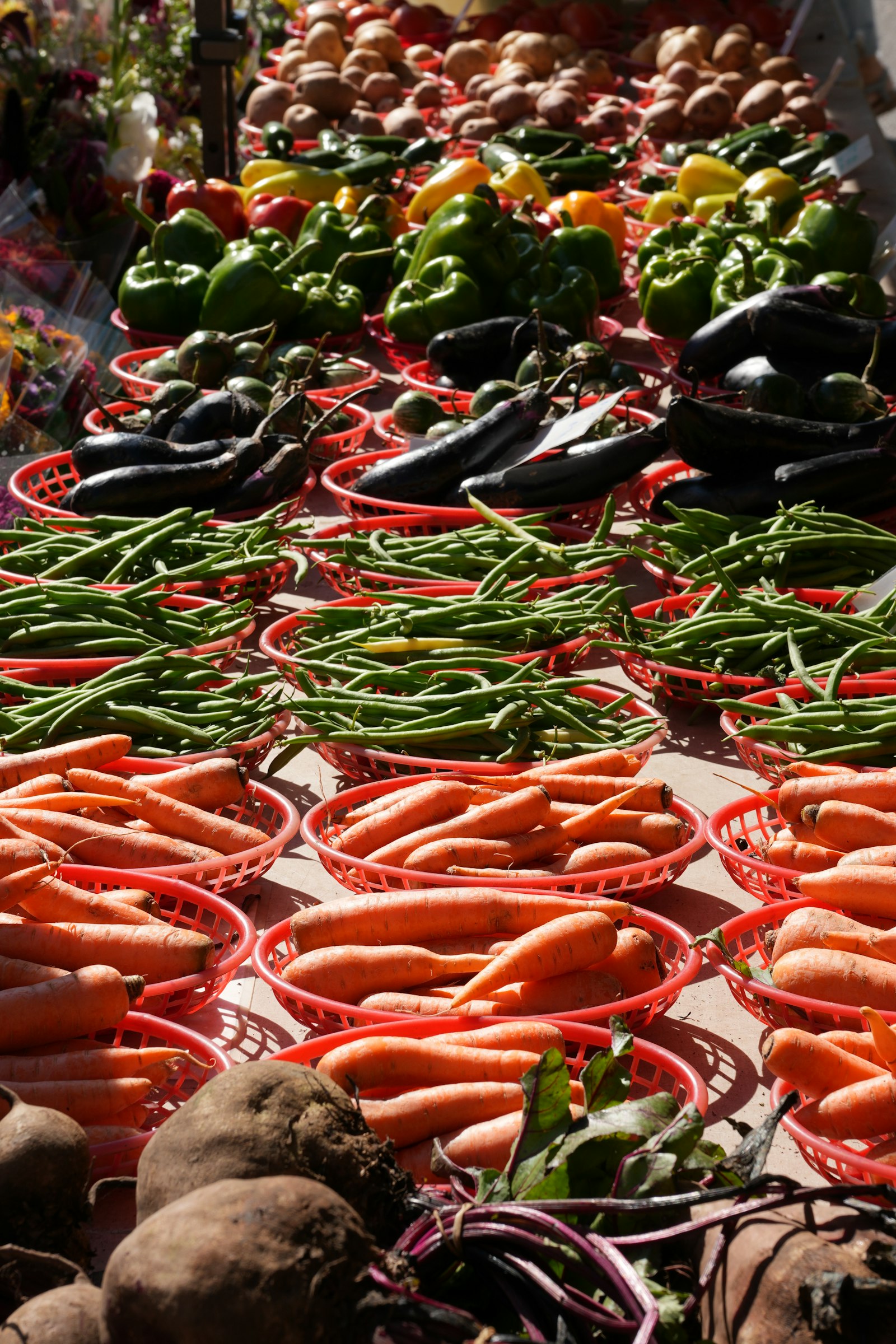
Health built into how you live.
Bureau 4 sets the standards for food, nutrition, farming, medicine, and ecological care — a whole farm-to-table civilization. It runs no clinic, no restaurant, and no farm. Its conviction is that health is produced first by the design of daily life, and only then by treatment.
Standards Before Treatment
Health, certified at the source.
Bureau 4 sets and certifies the standards for food, medicine, and ecological care across the community — then certified Enterprise Owners run every clinic, farm, and kitchen. It runs none of them itself.
- Food safety
- Provider certification
- Medical eligibility
- Ecological standards
Standards for food, health, and ecology — not the operations
Bureau 4 publishes the standards for clinics and care, diet and nutrition, restaurants and food logistics, gardens and greenhouses, medicinal plants, biodiversity, food safety, provider certification, and catastrophic-insurance medical eligibility. It operates none of them.
It is the biological foundation of Department II — the District bureau — alongside Bureau 5 (life plans and Business Enterprise) and Bureau 6 (recreation and hospitality). Certified Enterprise Owners and contractors deliver every bit of the actual work: the clinics, the restaurants, the farms, the greenhouses, the medicinal cultivation, the insurance companies. Bureau 4 certifies those Enterprise Owners, sets the conditions under which their services are admissible, and holds the safety and quality thresholds they must meet.
Enterprise Owners operate; Bureau 4 governs. It certifies and sets standards, but never runs a health or food business itself.
Bureau 4 sets standards for
- Provider certification & care admissibility
- Food safety & nutrition
- Restaurant & food-logistics standards
- Farmland & greenhouse suitability
- Medicinal plants & biodiversity
- Catastrophic-insurance medical eligibility
It never does
- Run clinics, hospitals, or pharmacies
- Operate farms, greenhouses, or restaurants
- Own land or hold title (Bureaus 2 & 8 do)
- Run an insurance company
- Distribute food or employ labor
- Keep a reservation or registry system
Wellness produced by the shape of the community
The founding premise is that health is not mainly a medical problem to be solved by intervention — it is an achievement of daily conditions. Build the community well, and health follows as a byproduct of ordinary life.
A walkable day
People walk to farms, restaurants, greenhouses, workshops, and clinics rather than driving — so ordinary physical activity is built into how the community is laid out.
Professional food, not packaged food
A food system built around professional culinary Business Enterprise and fresh local produce yields better average nutrition than a household model leaning on industrial packaged food.
Hands in the greenhouse
Box-garden greenhouses give residents therapeutic activity, ecological literacy, and fresh specialty produce as a byproduct of routine participation.
So Bureau 4 governs not only clinical standards but the whole civilizational infrastructure through which health is produced — the movement, the meals, the gardens, and the ecology that keep participants capable across a working life and across generations.
Food as health, hospitality, ecology, and craft
NewVistas food is a farm-to-table civilization, not merely an industrial supply chain. Restaurants are the core culinary infrastructure — replacing repetitive household food labor with decentralized professional culinary Business Enterprise.
Because meals ordinarily come from this district food-service system, apartments are equipped only with kitchenettes rather than full kitchens. The kitchenette still matters — it preserves private nourishment, illness recovery, fasting, medication timing, and guest hospitality — but it avoids duplicating a full household kitchen in every home. When someone is sick or can’t go out, fresh meals are delivered to the apartment refrigerator for short-term use; there is no freezer, no bulk storage, and no food-stockpiling model.
Residential greenhouse gardens are not bulk-calorie systems. They support herbs, medicinal plants, fungi, edible flowers, pollinator species, rare crops, therapeutic Business Enterprise, children’s biology education, and simple beauty. And the farming itself is deliberately small and specialized: the community favors many farmers on small lots — often two to five acres, with roughly fifteen acres as an upper reference for ordinary farming — rather than giant farms or isolated estates.
Many farmers, many small lots, high specialization — food treated as culture and ecology, not just supply.
No hospital — many clinics, close to home
Because the inner community has no road network for large vehicles, there is no community hospital, no firetruck system, and no truck-ambulance system. Care is distributed instead of centralized.
Care runs through many clinics in the first-floor commercial areas of the inner community. Every district — every four villages, about 4,000 people — supports a small emergency center for triage, stabilization, urgent care, referral, short observation, and at-suite gurney-style response through the walkable, bikeable, and pod breezeways.
Bureau 4 also protects pluralism in who provides care. Licensed providers operate under jurisdiction-compliant certification; non-licensed practitioners — herbalists, traditional healers, nutrition counselors, midwives, massage therapists, meditation guides — are admissible under published standards that require clear disclosure of licensed-versus-non-licensed status. Participants choose freely; Bureau 4 governs disclosure, safety, and admissibility rather than suppressing alternatives. Insurance is handled the same way it handles everything: Bureaus 4, 5, and 6 govern the required insurance-plan domains, while competing Enterprise Owner-owned insurance companies operate on community credit lines.
The food-and-health rail among the others
Life-plan health variation & eligibility for required plans.
Recreation & hospitality — the rest of District life.
Lease and title/finance for farmland & buildings.
Equipment lease and title for food & care systems.
Greenhouse thermodynamics & food logistics.
Health/food metrics & agricultural material inputs.
Bureau 4 sets the standards that make health, food, medicine, biodiversity, and ecological care work as one integrated domain — while every clinic, farm, restaurant, and greenhouse is operated by an Enterprise Owner, never by the bureau.
Health by design, food as civilization
Bureau 4 sets the standards for the community’s food, health, farming, medicine, and ecology. It owns nothing and operates nothing — Enterprise Owners run the clinics, farms, restaurants, and greenhouses; Bureaus 2 and 8 hold land and title.
Its insight is that a healthy community is engineered before it is treated: build in walking, professional fresh food, hands-on greenhouses, and distributed clinics, and most health follows from the way people already live.
Architecture before treatment; many farmers, many clinics; standards, not operations.