Chapter 7: Replication, Diffusion & the World That Results
Two Bodies Beyond the Bureaus
Two bodies stand outside the twenty-four bureaus, and both are constrained by the same logic that limits them. The NewVistas Institute’s authority is limited to licensing: it licenses each specific building in every community and provides, maintains, and improves the operating software through which the community functions. It is paid by an automatic real-time fee — a percentage of each community’s transactions, kept as low as possible while sustaining a best-in-class platform. It does not govern communities, hold community assets, operate bureaus, or override community rails.
The Council of 50 coordinates among NewVistas communities without ruling them. Through aggregate, privacy-preserving comparison, it supports benchmarking, research diffusion, trade balancing, materials continuity, and utility learning, letting communities learn from one another and settle trade honestly — without owning communities, centralizing production, or becoming a higher government. Like the bureau councils beneath it, it coordinates but never governs.
The Build Sequence: From One Founder to a Full Community
NewVistas is not a master-planned development that requires a billion-dollar investment before residents arrive. It grows step by step — one building, one presidency, one enterprise at a time — with each stage helping finance the next, deliberately gradual so early participants are never exposed to community-wide losses.
| Step | What happens |
|---|---|
| 1. One founder qualifies | Applies, demonstrates understanding, passes qualification testing, shows a track record running a business. Age band 30–72. No community yet — founder eligibility only. |
| 2. Four found the first presidency | Institute-vetted candidates from each of the four ABCD Segments are narrowed to two and filled by witnessed random draw, forming the first cross-Segment Trustee presidency, which establishes the Community Asset Trust — owned by no one. |
| 3. Twelve form the first council | The same discipline fills the remaining eight seats. Twelve members form three cross-Segment presidencies of four (Trustee, Constitutional, Continuity) and four Segment presidencies of three. Lots set the term stagger. Governing structure in place — still no building. |
| 4. First forty renters recruited | Twenty-eight more participants sign three-year market-rate leases for a building not yet built. Signed leases give the bank cash-flow evidence for construction financing — demand comes before debt. |
| 5. First building financed and built | The Institute grants a building license and certified-vendor access, lowering construction costs. Forty renters move in with cars and personal assets intact. No Enterprise Owners yet — a one-year proving period tests both sides. |
| 6. Buildings multiply | Leases first, then financing, then construction, repeating. At 4 buildings, the first modest enterprises appear (property management, dining, landscaping). At 10 buildings, one full village is complete. |
| 7. First district — the real transition | At 40 buildings (~3,840 people), the community has enough net worth for asset-backed credit lines. Bureau 5 stands up in-house life planning and education. The full economic model becomes operational. |
This is more than a practical convenience — it is designed to prevent failure from spreading to the whole community. During the rent-only stage, a failed early community costs a renter only a deposit. Each building is financed by its own signed leases, so the community never speculates with capital it hasn’t secured. External banks hold liens on specific assets only, never a general claim on kept residual. Enterprise failures are addressed internally first, through the community 10% fee, before ever reaching outside lenders. And if a community closes, it closes cleanly — as a nonprofit trust with no private owners, any remaining capital after an orderly wind-down is donated to another community, never distributed as private gain.
Early buildings are also designed to be moved. Because they’re placed wherever site conditions first allow — not necessarily their final position in the mature layout — the structural system allows a completed building to be disassembled, relocated, and reassembled at roughly 10% of original construction cost. No early placement mistake is permanent.
Why Now: The Technologies That Make This Possible
The NewVistas model has been a coherent design for years. What changed is the technology needed to run it — tasks that once required large clerical staffs or major physical infrastructure are now inexpensive, automated, or available to small businesses:
- AI Agents — legal support, accounting, life planning, and business-plan preparation, once requiring large professional staffs, now handled so one person with a validated plan can run a business that previously needed a team.
- Fully Digital Transactions — continuous title recording and nightly credit-line reconciliation run at near-zero cost per transaction; the Storehouse clearing function, once dependent on physical ledgers and clerks, now runs automatically.
- Robotics and Automation — housekeeping, laundry, meal preparation, and construction, a large share of community labor, can be handled by robotic systems operated by a single Enterprise Owner.
- Fuel Cells — solid-oxide fuel cells now power, heat, cool, and supply water to a single apartment building as a self-contained utility organism, no municipal grid connection required.
- Modular Construction — buildings are designed to be assembled from standardized modules and, crucially, disassembled and reassembled elsewhere as the community’s optimal layout becomes clear.
- Digital Governance — secure voting, privacy-preserving record-keeping, and verifiable audit trails now run through secured applications accessible anywhere, making it operationally feasible to govern 1,920 presidents across a community of 100,000 in a way it never was before.
“The design specified something that no prior century had the tools to build. Those tools are now arriving together, within a narrow window.”
Who Builds — Who Governs
The same constitutional rule that governs the mature community governs the startup: governing bodies never become operating departments. The council doesn’t build the first apartment building — a certified contractor does. The council doesn’t manage the building — a property-manager Enterprise Owner does. The council governs approvals, due process, and constitutional standards; the people actually doing the work are always Enterprise Owners and certified contractors. This distinction is maintained from the very first building and never relaxed — it’s what prevents the governing structure from accumulating operational power and turning into the kind of administrative organization it’s designed to prevent.
Once a first community reaches full operation, the same pattern — founder qualification, lease-financed buildings, renter phase, district buildout, Business Enterprise formation — is laid off again in a new location. The second community doesn’t report to the first; it operates under the same constitutional design, independently.
From One Community to Hundreds: The Council of 50
At eight districts — roughly 30,720 people — every bureau is fully operational, well before the community reaches its full twenty-four-district, 92,160-resident build-out. The community is walkable; internal transport removes the need for private cars; the full clothier, food, health, and education infrastructure runs through Enterprise Owner businesses. Residents can now divest personal property fully and live entirely on what the community’s services provide.
| Scale | What’s in place | What becomes possible |
|---|---|---|
| Council of 12 | Founding governance; Community Asset Trust setup | Site approval, financing process, first renter recruitment |
| 1 building, ~96 people | First renters; property manager | Rental income proves occupancy; one-year demonstration begins |
| 4 buildings, ~384 people | Branch presidencies; first village presidency | First modest enterprises: property, dining, landscaping |
| 10 buildings, ~960 people | Full village governance | Service enterprises multiply; entry preparation begins |
| 40 buildings, ~3,840 people | First district building; Bureau 5 operational | Formal Enterprise Owner formation; real credit lines |
| 8 districts, ~30,720 people | All 8 Departments operational | Full walkable community; internal transport; all Enterprise categories |
| Full community, ~92,160 | Complete constitutional organism | 24 districts; 96 villages; 1,920 presidents; Council of 50 eligible |
As communities multiply toward fifty, the Council of 50 forms as the coordination field where communities specialize, trade honestly, and pass on what they’ve learned — no community loses its independence in the process. The trajectory from one qualified founder to a full community to a Council of 50 is measured in decades, not years. That is not a flaw in the design; it is the design. A civilization built on sound financial foundations, with each step proven before the next begins, is more durable than one built quickly on untested assumptions.
The Deployment Philosophy: Why a Single Building Comes First
NewVistas rests on a practical conviction: lasting communities should be built only on proven governance, sound economics, reliable technology, and verified market demand. It begins with a single standardized building that serves as a working model of the larger community — uniting housing, commerce, utilities, computing, governance, and economic activity in one integrated platform. The sequence is deliberate: governance first, demand proven before debt, standardized systems before construction.
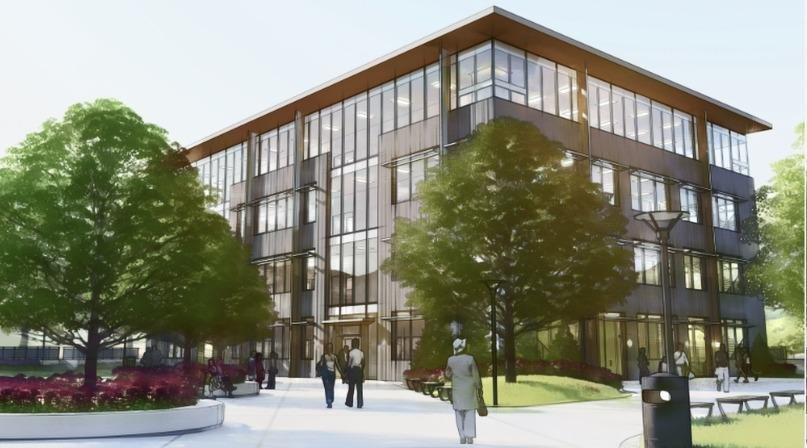
Site independence is central: the standardized pile-grid foundation adapts to rock, soil, sand, mud, wetlands, hillsides, tidal zones, snow regions, and permafrost, so construction decisions are guided by demand and access rather than ideal geology.

Building One Is the Validation Test
Before construction financing, the property manager must secure forty executed three-year auto-renew residential leases — binding leases, not reservations — and all twelve council members must lease and live in the first building themselves. Each leaseholder deposits first-and-last month’s rent into an external interest-bearing escrow account, never touched for construction. A standby waiting list of qualified replacement leaseholders protects occupancy. The building must also sustain at least 75% occupancy in its twenty-four short-term suites and 75% commercial occupancy on the first floor, and its one-hundred-person restaurant must actually function — evidence the location can support daily social and commercial life, not just an amenity.
Expansion is earned strictly through performance: to qualify for a second community, a founder group must successfully operate four licensed residential buildings while maintaining occupancy, enterprises, and compliance. The Institute’s license to build each building carries an illustrative grant value of $3 million — embedded net worth that lets the startup proceed without any participant investing equity. Participants sign leases and pay escrow deposits; they never purchase an interest in the structure. The lender’s basis for financing combines that license value, the completed building’s appraisal, and the capitalized value of the signed, auto-renewing leases — an asset-value and lease-cash-flow driven model, not a guarantee of approval.
Digital, Documented Construction
Major building assemblies are designed for standard forty-foot shipping containers, so the whole system runs on established global freight infrastructure. Every component carries permanent laser-engraved identification and QR coding, color-coded by system. When a worker scans a part, an Institute-provided assembly application identifies it, verifies the sequence, displays instructions, and guides installation by audio through headphones. A supplied battery-powered torque wrench with a built-in camera tightens each fastener to specification, records the torque result, captures visual evidence, and uploads it to an AI-monitored deployment database in real time. Construction becomes a documented, visually recorded, AI-reviewed assembly process rather than on-site improvisation — fuel-cell modules connect to power and thermal systems, water- and waste-processing modules connect to housekeeping and recovery, server modules connect to power and cooling, each with predetermined, labeled connection points.
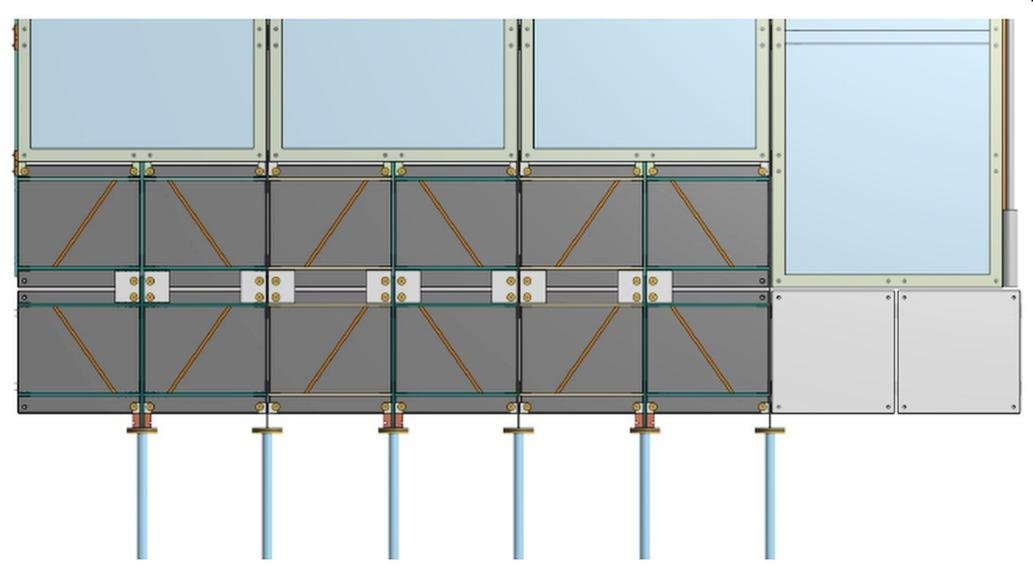
The certified logistics company delivers containers just in time — the Community Asset Trust wires 50% of the total system price when the purchase order is placed, and the remaining 50% as containers and delivery lots actually arrive, each paid the day it lands. Components arrive labeled, sequenced, and ready to connect, so the assembly contractor’s site stays organized around the current stage of work rather than managing thousands of separate procurement choices.
What the Institute Provides, What the Community Executes
The founder’s role is narrow and specific: study the system, earn Institute certification, initiate the seating of the twelve-person council, then serve as one co-ordinate member among the twelve. After that, the council, trust, property-manager, and certified logistics channel carry the startup through qualification, financing, purchase, and deployment.
| The Institute provides | The local community executes |
|---|---|
| Building designs, engineering standards, foundation systems, layouts | Council uses licensed standards to govern deployment readiness |
| Participant, leasing, accounting, governance, and utility-billing software | Trust and property-manager implement approved systems under council governance |
| AI agent frameworks, participant and Enterprise Owner AI assistants | Certified systems support operations without local invention of AI platforms |
| Standardized components, QR assembly systems, certified vendor networks | Property-manager coordinates site prep and contractor execution |
| Council, presidency, and trust structures; bylaws; certification standards | Founder initiates council seating; council forms the trust as a formal act |
| Complete fuel-cell, water, waste, and communications systems | Property-manager verifies local fuel logistics and regulatory readiness |
| Building and replication qualification standards, performance metrics | Council measures performance and expands only after meeting standards |
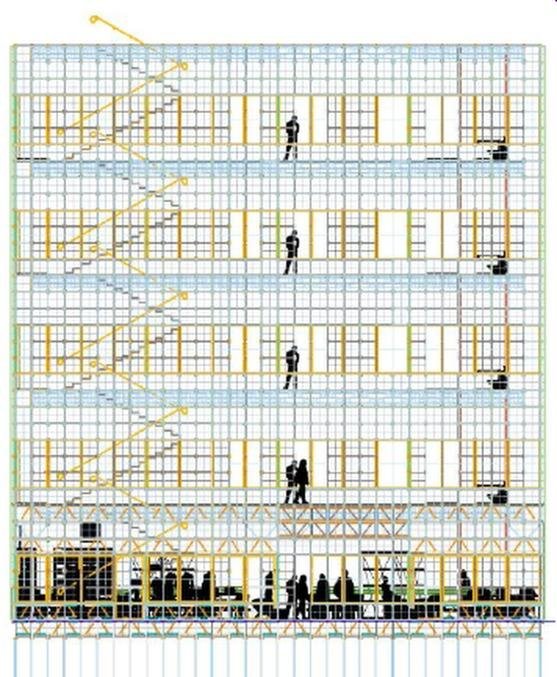
The Council of 12 governs the construction process by selecting the property-manager Enterprise Owner, approving the deployment path, reviewing reports, and enforcing standards — it does not invest, operate, contract with itself, or direct field work. And every one of the twelve council members leases and lives in Building One, so they experience the governed system directly, not from the outside.
Glossary: The Working Vocabulary of Replication
Building One — the first standardized deployment, used to test governance, demand, operations, utilities, computing, and economics before any expansion is permitted.
Disassemblable building — a standardized building designed to be assembled, taken apart, moved, and reassembled through the same QR-code-guided, torque-recorded modular system.
Relocation cost — the cost of moving a building into its final community position, treated as 10% of building cost precisely because it’s designed for disassembly and reassembly.
Replication threshold — the performance standard (four successfully operated buildings) required before a founder group may be granted expansion rights for a new community.
Village — a coordinated group of ten residential and mixed-use buildings, the first larger social and service unit beyond a single building. A completed NewVistas has ninety-six of them.
District — a group of four villages. A completed NewVistas has twenty-four.
Utility independence — the use of local energy, water, communications, and waste-processing systems to reduce dependence on external infrastructure.
The frame is now complete, and set in motion: one founder, one council, one building, proven before the next begins — repeated, community by community, until the pattern the PLOT commanded to “fill up the world” has somewhere real to start.